
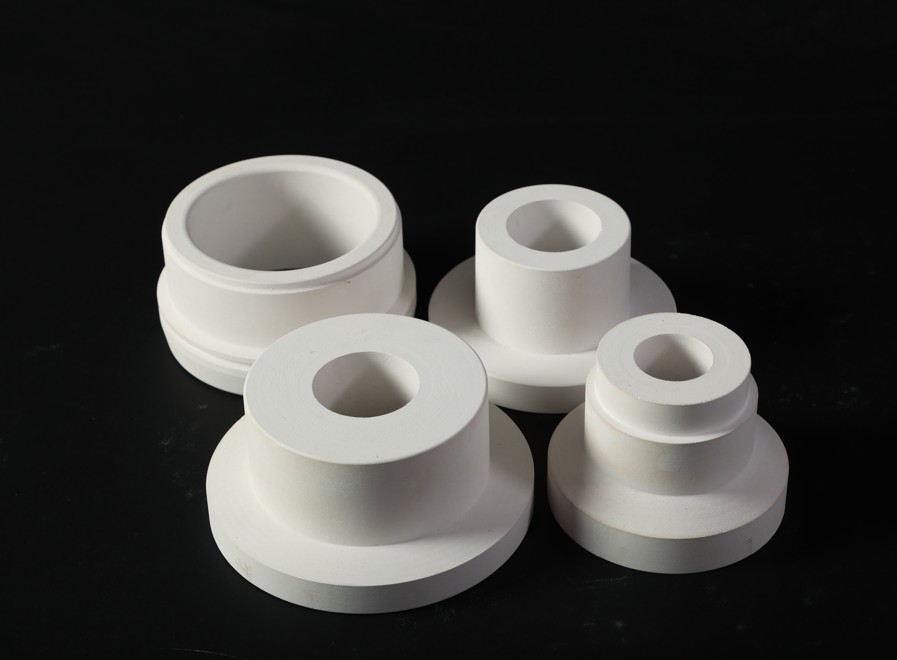
Most insulation materials crack, spall, or crumble when subjected to rapid temperature swings. The 980kg/m³ thermal shock grade calcium silicate board is specifically engineered to survive exactly that — repeated heating and cooling cycles without losing structural integrity or insulation performance.
This guide explains what thermal shock resistance means in practice, why it matters for your application, and how the 980kg/m³ grade compares to other high density options.
What Is Thermal Shock and Why Does It Destroy Insulation?
Thermal shock occurs when a material experiences a sudden, large temperature change — for example, when a furnace door opens and the lining goes from 900°C to 200°C within minutes, then back to 900°C when the door closes.
This rapid change creates uneven expansion and contraction within the material. Standard insulation boards develop micro-cracks that grow over time, eventually causing the board to break apart. The result: costly downtime, maintenance, and replacement.
The 980kg/m³ thermal shock grade solves this problem through a specially optimized microstructure that flexes with temperature changes rather than fighting them.
Technical Specifications
Bulk Density: 980 kg/m³
Compressive Strength: ≥ 15 MPa
Flexural Strength: ≥ 8 MPa
Max Service Temperature: 1100°C
Long-term Service Temperature: 1000°C
Thermal Conductivity (200°C): ≤ 0.12 W/m·K
Linear Shrinkage (1000°C, 24h): ≤ 2.0%
Asbestos Content: 0% (Asbestos-free)
What Makes the 980kg/m³ Grade Special?
1. Engineered for Thermal Cycling
While other high density boards prioritize static strength or chemical resistance, the 980kg/m³ grade is optimized for dynamic thermal environments. The xonotlite crystal matrix is formulated to absorb thermal stress without propagating cracks — maintaining performance through thousands of heating and cooling cycles.
2. The Right Balance of Density and Flexibility
At 980 kg/m³, this grade sits in a carefully calculated sweet spot. Higher density boards like the 1200kg/m³ grade are stronger but more rigid — they excel in static applications but are less forgiving under thermal shock. Lower density boards absorb shock better but lack the mechanical strength for structural applications. The 980kg/m³ grade delivers both.
3. High Mechanical Strength
With ≥15 MPa compressive strength and ≥8 MPa flexural strength, the board can handle mechanical loads while enduring temperature swings. This combination is rare in insulation materials and is what makes this grade particularly valuable.
4. Low Thermal Conductivity
Despite its high density, the board maintains excellent insulating properties with thermal conductivity ≤ 0.12 W/m·K at 200°C. Energy is kept where it belongs — inside the process, not escaping through the insulation.
Where Thermal Shock Grade Is Essential
Cement Industry — Preheater Cyclones and Kiln Hoods
Cement plants operate continuously, but process upsets, maintenance shutdowns, and operational changes create frequent temperature fluctuations in preheater systems. The 980kg/m³ grade maintains integrity through these cycles, reducing maintenance frequency and extending service intervals.
Foundry and Metal Casting
Foundry operations involve repeated heating of crucibles, ladles, and molds followed by rapid cooling. The thermal shock grade withstands this punishment without the spalling and cracking that plague standard insulation materials.
Glass Manufacturing
Glass furnaces experience significant temperature variations during batch changes and maintenance cycles. The 980kg/m³ board provides reliable insulation that doesn't degrade with each thermal cycle.
Industrial Furnaces — Batch Operations
Any batch-process furnace — heat treatment, ceramics, calcination — subjects its insulation to repeated thermal cycling. The thermal shock grade is designed specifically for this pattern of use.
Boiler Systems — Startup and Shutdown Cycles
Power plant boilers and industrial steam generators experience thermal shock during startup and shutdown. Using thermal shock grade insulation around critical components extends equipment life and reduces unplanned outages.
How to Choose: 980kg/m³ vs Other High Density Grades
Each HR RHINO high density grade is optimized for a specific type of challenge:
N-17 Carbon Fiber (800 kg/m³) — Best for casting, fiber-reinforced applications
N-14 Structural (850 kg/m³) — General structural insulation, consistent performance
Thermal Shock (980 kg/m³) — Rapid temperature cycling, thermal fatigue resistance
Molten Aluminum (1020 kg/m³) — Direct molten aluminum contact, non-wetting
High Strength (1200 kg/m³) — Maximum static mechanical strength
Choose the 980kg/m³ grade when your primary challenge is repeated temperature changes — not just high temperature, but changing temperature.
A simple decision guide:
— If the temperature is constant and very high → choose 1200kg/m³ for maximum strength
— If the material contacts molten aluminum → choose 1020kg/m³ for non-wetting
— If the temperature changes frequently and rapidly → choose 980kg/m³ for thermal shock resistance
Real-World Performance
In cement plant preheater applications, HR RHINO 980kg/m³ boards have demonstrated service lives exceeding 3–5 years under continuous thermal cycling conditions — significantly outperforming standard calcium silicate boards that typically require replacement every 12–18 months in the same environment.
The key to this longevity is the board's ability to maintain its microstructure through thousands of thermal cycles without the progressive crack growth that limits the life of conventional insulation.
Installation and Handling
The 980kg/m³ board can be cut with standard carbide-tipped tools and installed using conventional methods. Key installation tips:
- Allow 2–3mm expansion gaps between boards in applications with thermal cycling
- Use stainless steel fasteners rated for the operating temperature
- Stagger board joints to prevent continuous crack paths
- Apply a thin ceramic fiber blanket behind the boards for additional thermal shock buffer in extreme applications
Ordering Information
HR RHINO supplies the 980kg/m³ thermal shock grade in standard board sizes as well as custom dimensions. Available options include:
- Standard board sizes: 1000mm × 500mm, other sizes available
- Thickness range: 15mm to 75mm
- Custom CNC-machined shapes for specific applications
- Technical Data Sheets and test reports provided with every order
Contact our technical team today for application-specific recommendations, free samples, and factory-direct pricing. We respond to all inquiries within 24 hours.
Conclusion
The 980kg/m³ thermal shock grade calcium silicate board fills a critical gap in the insulation market — providing the rare combination of high density, good mechanical strength, and exceptional resistance to thermal cycling damage. For any application where temperature changes rapidly and frequently, this grade delivers longer service life, lower maintenance costs, and more reliable thermal performance than standard alternatives.
Backed by HR RHINO's 18 years of manufacturing expertise and exported to over 30 countries, the thermal shock grade is a proven solution trusted by engineers in cement, metallurgy, glass, and power generation industries worldwide.