
A modern cement plant burns through energy the way few other industries can match. The rotary kiln alone consumes 3,000–4,000 MJ of thermal energy per tonne of clinker produced. Across the entire pyroprocessing system — from the preheater tower to the clinker cooler — heat losses through poorly insulated walls, ducts, and vessels represent one of the largest controllable operating costs in the plant.
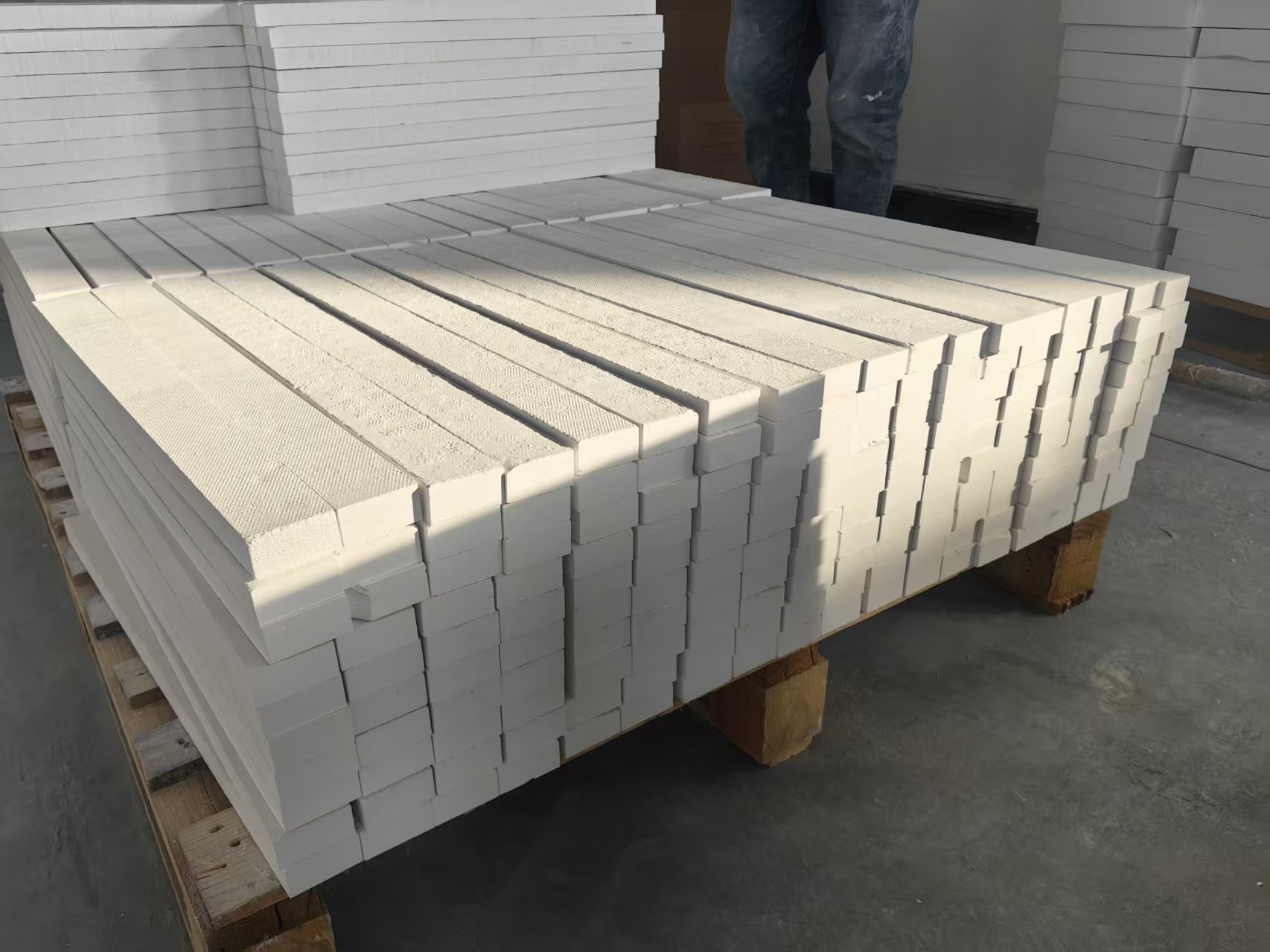
This is where calcium silicate insulation blocks earn their place. Rated for continuous service at 1100°C with low thermal conductivity and excellent structural stability, these blocks form the insulating backbone of efficient cement plant operations worldwide.
This guide covers where cement kiln insulation blocks are used, how they reduce energy consumption, what specifications matter, and how to select the right block for each position in your plant.
Why Cement Plants Need Specialized Insulation Blocks
Cement production is not just hot — it is aggressively hot, chemically corrosive, and mechanically punishing. The pyroprocessing system operates continuously for months between maintenance shutdowns, with gas temperatures ranging from 350°C in the upper preheater stages to over 1450°C in the burning zone of the rotary kiln.
Standard insulation materials fail in this environment for several reasons. Mineral wool compresses and loses insulating value under its own weight at high temperatures. Ceramic fiber blankets degrade from alkali attack — a serious problem given the high alkali content of cement raw meal. Lightweight insulating firebricks crumble under thermal cycling and mechanical vibration.
Calcium silicate insulation blocks overcome all three of these limitations. They maintain dimensional stability under load at temperatures up to 1100°C. They resist alkali attack far better than fiber-based alternatives. And their combination of moderate density and mechanical strength means they hold up to the vibration and thermal cycling that are inherent to cement plant operations.
Six Critical Insulation Positions in a Cement Plant
1. Preheater Cyclone Shells
The preheater tower is the single largest opportunity for energy savings through better insulation. Cyclone shell temperatures often reach 350–450°C on the outer surface — each degree of excess surface temperature represents heat that was paid for in fuel but never contributed to clinker production.
Calcium silicate blocks installed behind the refractory lining of cyclone shells reduce heat flux through the wall by 40–60% compared to uninsulated or deteriorated insulation. For a typical 5000 tpd preheater, this translates to fuel savings of 2–4% of total kiln thermal input — worth hundreds of thousands of dollars annually at current fuel prices.
Block specification for cyclones: Standard density 220–300 kg/m³ provides the best thermal performance in this position. The relatively moderate temperatures (refractory hot face sees 600–900°C, insulation layer sees 300–500°C) allow lower-density, more efficient blocks to be used.
2. Kiln Hood and Nose Ring Area
The kiln hood operates at 800–1000°C gas temperature with intense radiant heat from the burning zone. This is one of the harshest positions in the plant — combining high temperature, clinker dust abrasion, and thermal shock from kiln cycling.
Calcium silicate blocks in the kiln hood area must balance thermal insulation with sufficient density to resist abrasion and mechanical damage during maintenance. Higher density grades (400–500 kg/m³) are typically specified here, sacrificing some insulation efficiency for durability.
The payoff is significant: well-insulated kiln hoods reduce heat loss, protect structural steel from overheating, and improve working conditions for operators and maintenance personnel in the kiln hood area.
3. Clinker Cooler Walls and Ceiling
The clinker cooler receives 1400°C clinker from the kiln and cools it to approximately 100°C using ambient air. The cooler walls and ceiling operate at sustained temperatures of 400–800°C depending on position, with frequent temperature excursions during process upsets.
Insulation blocks in the cooler must tolerate thermal cycling, clinker dust, and occasional mechanical impact from falling clinker. Standard density blocks (270–400 kg/m³) provide good thermal performance while maintaining adequate mechanical strength for this demanding environment.
Proper cooler insulation improves heat recovery efficiency — the hot air extracted from the cooler is used as secondary and tertiary air for combustion, so retaining heat in the cooler means more useful energy recovery and lower specific fuel consumption.
4. Tertiary Air Duct
The tertiary air duct carries hot air (700–900°C) from the clinker cooler to the precalciner. This duct is often 30–50 meters long and operates under slight negative pressure, making it susceptible to air infiltration through gaps in deteriorated insulation.
Calcium silicate blocks provide a continuous, dimensionally stable insulation layer that maintains its integrity over the long spans typical of tertiary air ducts. The low thermal conductivity minimizes heat loss along the duct length, ensuring that maximum thermal energy reaches the precalciner where it is needed.
Block specification: 220–270 kg/m³ density is optimal for tertiary air ducts. The moderate temperatures allow the most thermally efficient grades to be used, and the long duct lengths mean that small improvements in insulation efficiency multiply over a large surface area.
5. Precalciner Vessel
The precalciner operates at 850–900°C and is responsible for approximately 60% of the tota