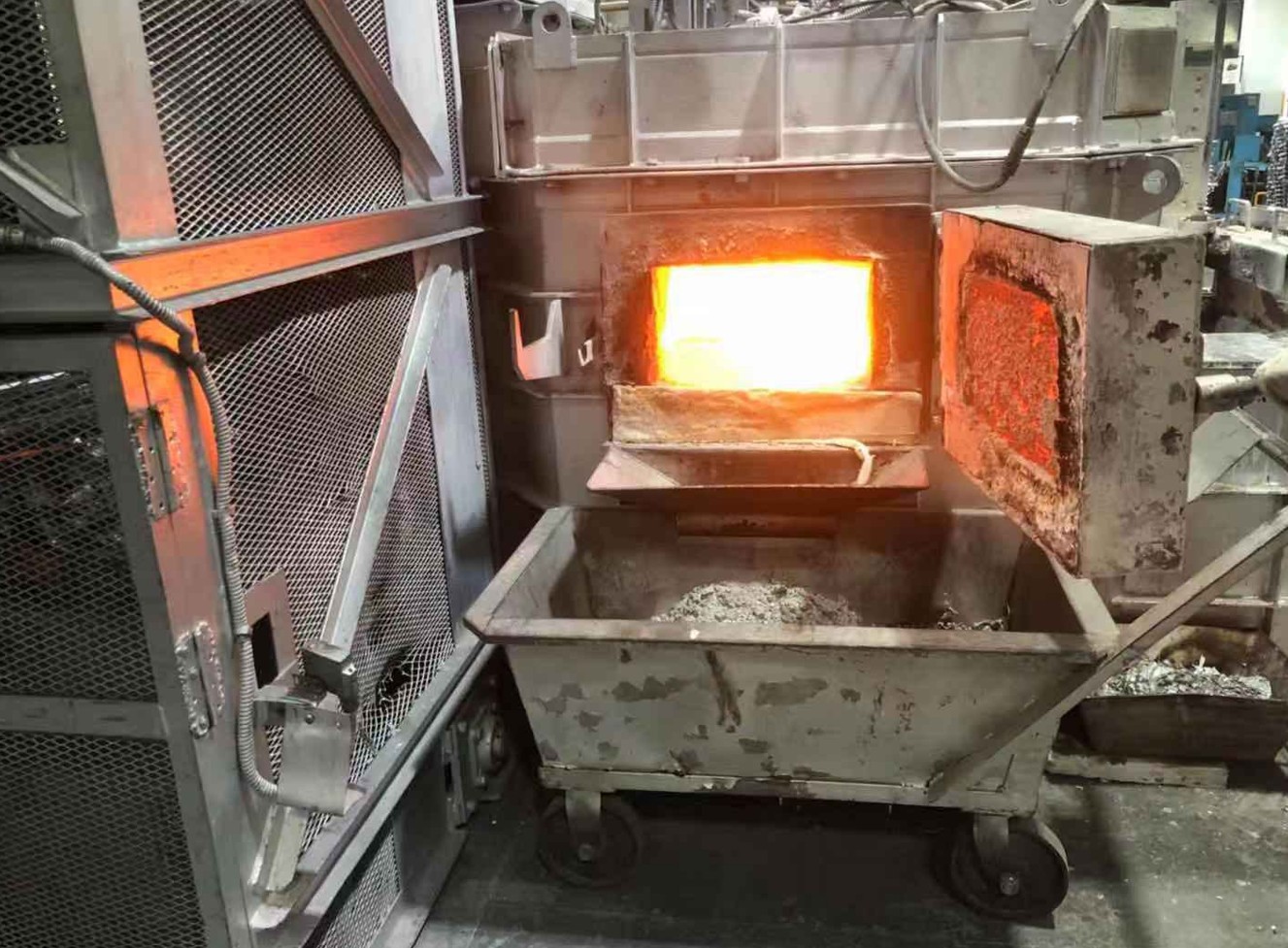
Molten aluminum destroys most insulation materials on contact. The metal penetrates porous surfaces, bonds permanently to rough textures, and corrodes anything containing iron or reactive minerals. Finding an insulation board that survives direct contact with 700°C liquid aluminum — and can be reused — is one of the aluminum industry's persistent engineering challenges.
The 1020kg/m³ calcium silicate board solves this problem with a unique non-wetting surface that molten aluminum simply cannot stick to. This guide explains the science behind it, where it is used, and why aluminum producers worldwide have adopted it as their standard lining material.
What Does "Non-Wetting" Mean and Why Does It Matter?
When molten aluminum contacts a porous or rough surface, it infiltrates the pores and bonds mechanically to the material as it solidifies. This is called "wetting." Once wetted, the insulation is permanently contaminated — the solidified aluminum cannot be removed without destroying the board.
A non-wetting surface prevents this infiltration. The molten aluminum sits on top of the board like water on a waxed car — it can be poured off or peeled away after solidification, leaving the board surface clean and ready for reuse.
The 1020kg/m³ calcium silicate board achieves non-wetting behavior through two mechanisms. First, its high density (1020 kg/m³) creates a tight, low-porosity surface that physically resists metal penetration. Second, the xonotlite-based chemistry is inherently non-reactive with aluminum — there is no chemical bond formation between the board surface and the molten metal.
This combination of physical and chemical non-wetting is what separates the 1020kg/m³ grade from lower-density calcium silicate boards that may resist heat but still get destroyed by metal infiltration.
Technical Specifications
Bulk Density: 1020 kg/m³
Compressive Strength: ≥ 18 MPa
Flexural Strength: ≥ 10 MPa
Max Service Temperature: 1100°C
Long-term Service Temperature: 1000°C
Thermal Conductivity (200°C): ≤ 0.13 W/m·K
Linear Shrinkage (1000°C, 24h): ≤ 2.0%
Non-Wetting with Aluminum: Yes
CNC Machinable: Yes
Asbestos Content: 0% (Asbestos-free)
Critical Applications in Aluminum Processing
Transfer Launders and Troughs
This is the most common application for the 1020kg/m³ grade. Launders are the channels that carry molten aluminum from the furnace to the casting station. They must keep the metal at temperature, prevent heat loss, resist thermal shock from repeated filling and draining cycles, and — critically — release solidified metal easily during cleaning.
The 1020kg/m³ board lines the interior of these launders, providing thermal insulation that maintains metal temperature and a non-wetting surface that allows quick, clean removal of any residual metal. A single set of boards can last through hundreds of casting cycles before requiring replacement.
Casting Tables and Mold Surfaces
In direct-chill (DC) casting operations, the 1020kg/m³ board is used as a contact surface around the mold assembly. Its non-wetting property prevents metal from bonding to areas where it should not solidify, while its high compressive strength (≥18 MPa) supports the mechanical loads of the casting operation.
Holding and Melting Furnace Linings
Inside aluminum holding furnaces and melting furnaces, the board provides an insulation layer that resists metal splash, spill, and direct contact. The non-wetting surface means that metal drips and splashes can be scraped off during maintenance rather than requiring board replacement.
Degassing and Treatment Stations
During aluminum degassing and grain refining operations, the metal is actively stirred and treated. Insulation surrounding these stations must tolerate metal splash and turbulent contact. The 1020kg/m³ grade handles this without degradation.
Transition Plates and Dam Boards
Custom-machined 1020kg/m³ boards serve as flow control elements in aluminum transfer systems — dams, weirs, baffles, and transition plates that direct metal flow. The CNC machinability of this grade allows precise fabrication of complex shapes that would be impossible with cast or pressed alternatives.
Skimmer Boards and Dross Separation
During skimming operations to remove dross (oxide layer) from molten aluminum, 1020kg/m³ boards are used as skimming surfaces and separator plates. The non-wetting property ensures clean separation between metal and dross.
What Happens When You Use the Wrong Material
Aluminum foundries that use standard insulation boards or lower-density calcium silicate in molten aluminum contact applications consistently report the same problems:
Metal penetration into the board within the first few uses, creating a contaminated composite that must be discarded entirely.
Metal adhesion that makes cleaning impossible — leading to dimensional changes in launders and troughs that affect metal flow and casting quality.
Board disintegration from thermal shock during the filling and draining cycles, creating debris that contaminates the metal.
Frequent replacement driving up material cost, labor cost, and most importantly, production downtime during relining.
The 1020kg/m³ grade eliminates all four of these problems. The higher upfront material cost is recovered many times over through extended service life and reduced downtime.
CNC Machinability — A Major Advantage
Unlike many refractory materials that are cast into shape and cannot be easily modified, the 1020kg/m³ calcium silicate board can be precision-machined using standard CNC equipment. This enables:
Complex launder profiles with optimized flow geometry
Custom-radius corners that improve metal flow and reduce turbulence
Tongue-and-groove joints for leak-free launder assembly
Precision-bored holes for thermocouple wells and drain plugs
Tapered dam boards for adjustable metal level control
Exact-fit replacement parts that match existing equipment dimensions
HR RHINO offers factory CNC cutting services — send us your drawings and we deliver ready-to-install components. This eliminates field cutting, reduces installation time, and ensures dimensional accuracy that improves system performance.
Comparing 1020kg/m³ with Alternative Materials
Ceramic Fiber Blankets — Low cost but zero mechanical strength, no non-wetting property, and rapid degradation from metal contact. Not suitable for any direct aluminum contact application.
Calcium Silicate 220–500kg/m³ — Good thermal insulation but too porous for molten aluminum contact. Metal penetrates the surface immediately.
Calcium Silicate 850kg/m³ (N-14) — Better density but not optimized for non-wetting. Acceptable for splash zones but not for sustained molten metal contact.
Calcium Silicate 1020kg/m³ — Purpose-engineered for molten aluminum contact. The optimal combination of non-wetting, thermal insulation, and machinability.
Calcium Silicate 1200kg/m³ — Higher strength but more rigid and more expensive. Overkill for most aluminum applications where 1020 provides sufficient strength.
Fused Silica Boards — Excellent thermal shock resistance but significantly more expensive and harder to machine. Used in specialty applications where 1020 calcium silicate is not chemically compatible.
For most aluminum foundry and smelter applications, the 1020kg/m³ grade offers the best balance of performance, machinability, and cost.
Extending Board Life — Practical Tips
Preheat new boards gradually before first contact with molten metal. A slow ramp from room temperature to 300°C over 2–4 hours removes residual moisture and prevents thermal shock cracking on first use.
Clean residual aluminum promptly after each casting cycle while the board is still warm. Solidified aluminum releases more easily from a warm surface than a fully cooled one.
Rotate boards in high-wear positions to distribute wear evenly and extend total system life.
Inspect for cracks during scheduled maintenance. Small cracks that do not affect structural integrity can be tolerated, but boards with through-cracks should be replaced to prevent metal leakage.
Store unused boards in dry conditions. While the 1020kg/m³ grade is moisture-resistant, starting dry ensures optimal non-wetting performance on first use.
Ordering and Technical Support
HR RHINO manufactures the 1020kg/m³ molten aluminum grade at our Qingdao, China facility. We supply:
Standard boards in various thicknesses from 15mm to 75mm
Custom CNC-machined launder sections, dam boards, and transition plates
Complete launder lining kits based on your equipment drawings
Technical Data Sheets, test reports, and MSDS documentation
Factory-direct pricing for both initial orders and ongoing supply agreements
Worldwide shipping with professional export packaging
Our technical team includes engineers wi